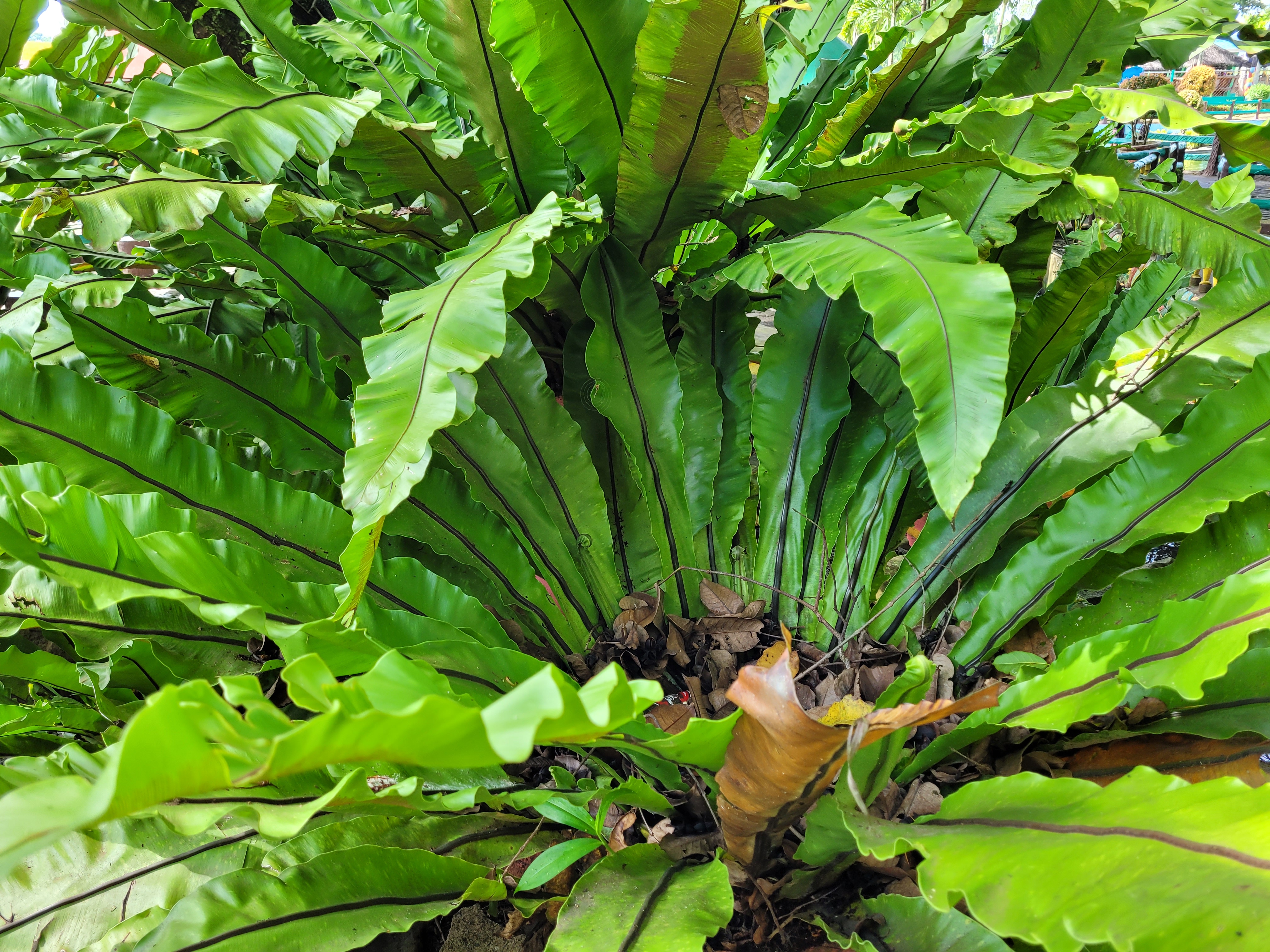
 Licensed representative photograph
Plant Guide
Bird's Nest Fern
Asplenium nidus
Other known names: Nest Fern
A tropical epiphytic fern with broad undivided fronds emerging from a central rosette.
Published source-backed guide. This guide meets Lorekeeper's published source, care-completeness, safety, and identity checks. It is source-backed, not an expert-review claim.
Safety not yet verified. Confirm the exact identification before deciding whether this plant is safe around children or pets. Catalog note: No toxicity claim is added in this provisional batch; confirm pet questions with a trusted veterinary source.
Care
- Light
- Medium to bright indirect light.
- Water
- Keep the root zone lightly moist but do not pour water into the crown.
- Growing medium
- An airy organic fern mix that drains well.
- Feeding
- Feed weakly during active growth.
- Temperature
- 60-85 F.
- Humidity
- Moderately high humidity with airflow.
- When to consider watering
- Check below the surface and respond before the root ball becomes completely dry.
- Watering method
- Keep the root zone lightly moist but do not pour water into the crown. Wet the root ball evenly and never leave drainage trapped in a cachepot.
- Repotting
- Repot only when roots, drainage, stability, or broken-down medium justify it; increase the pot size modestly.
- Pruning
- Remove damaged growth with clean tools and avoid unnecessary pruning during stress.
- Beginner note
- Treat reminders as prompts to observe. Record what you found, then complete, snooze, pause, or adjust the care item.
Observe the plant and growing medium before acting. A reminder is a prompt to check, not an automatic instruction to water.
Characteristics
A tropical epiphytic fern with broad undivided fronds emerging from a central rosette.
Names & botanical identity
- Accepted name
- Asplenium nidus
- Plant family
- Aspleniaceae
- Plant group
- Ferns
- Other known names
- Nest Fern
- Safety
- Safety not yet verified
Confirm the exact identification before deciding whether this plant is safe around children or pets. Catalog note: No toxicity claim is added in this provisional batch; confirm pet questions with a trusted veterinary source.
Growth
- Growth habit
- Rosette-forming epiphytic fern.
- Mature size
- 3–5 ft tall × 2–3 ft wide at maturity
- Native range
- Tropical Asia, eastern Africa, Australia, and Pacific islands.
- Temperature
- 60-85 F.
- Humidity
- Moderately high humidity with airflow.
- Difficulty
- Intermediate
Propagation
Usually propagated from spores; division is not appropriate for a single crown.
When you add a propagation to Lorekeeper, connect it to the mother plant so its history and lineage remain intact.
Problems to recognize
These links describe possible or look-alike relationships, not a diagnosis. Start with visible evidence and rule out alternatives.
- Excess moisture / root stress: Water trapped in the crown or dense media can damage tissue.
- Bacterial leaf spot syndrome: Wet lesions on broad fronds require isolation and monitoring.
- Fungus gnats: Moist organic fern media can support fungus gnats.
History & lineage
Asplenium nidus grows as an epiphyte or lithophyte in tropical forests, where its rosette catches organic material without sitting in soil like a typical ground plant.
Add this guide to My Plants to preserve acquisition notes, parent plants, propagations, photographs, and future name changes in one living record.
Keep the useful part
Save Bird's Nest Fern to your garden.
Carry this guide into a private plant record, then add your own photographs, care, journal entries, and lineage over time.
Keep exploring