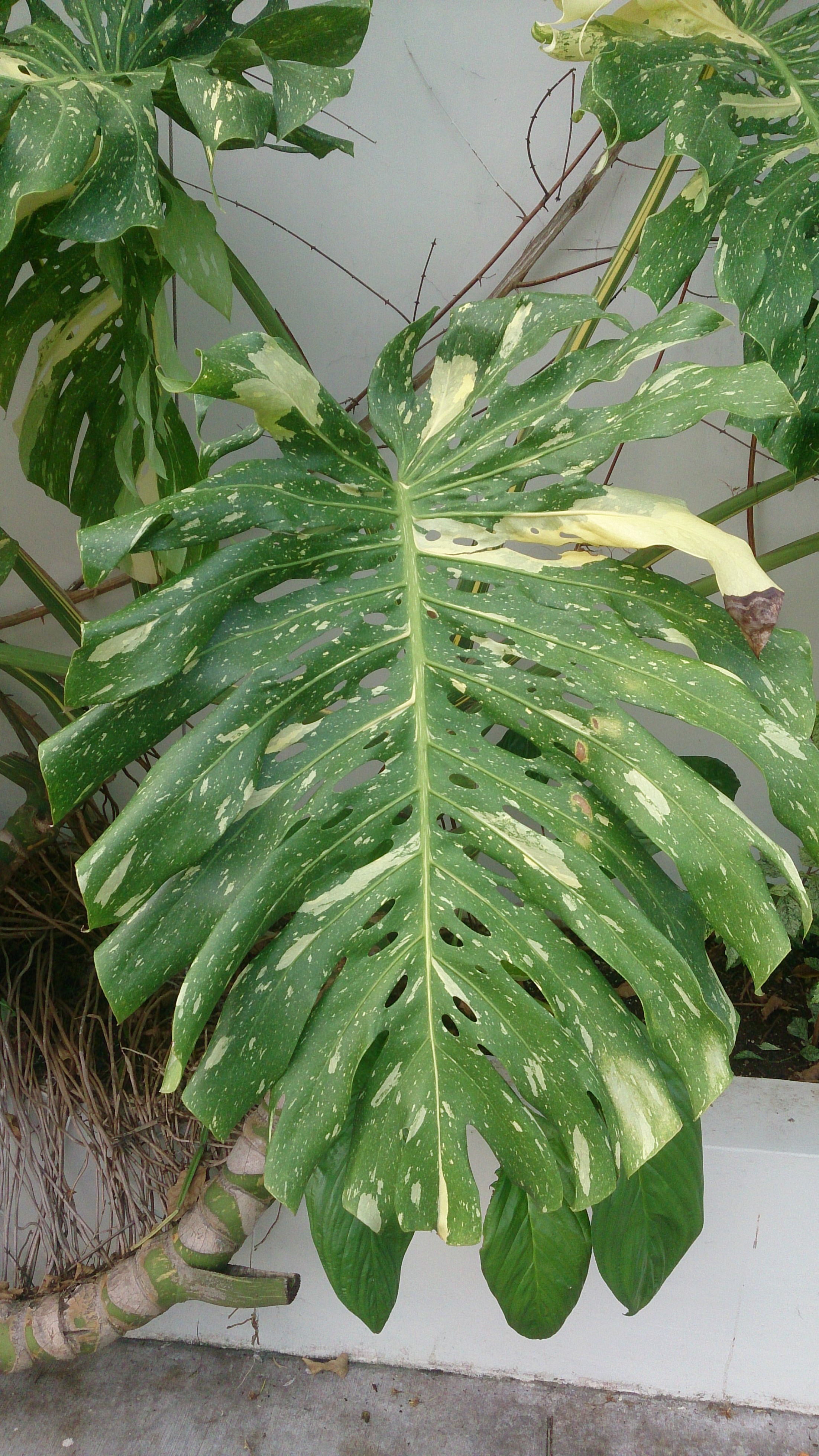
 Licensed representative photograph
Plant Guide
Monstera Deliciosa
Monstera deliciosa
Other known names: Swiss cheese plant · Split-leaf philodendron
A large climbing aroid whose mature foliage can form splits and internal openings when it receives enough light, support, and time.
Published source-backed guide. This guide meets Lorekeeper's published source, care-completeness, safety, and identity checks. It is source-backed, not an expert-review claim.
Toxic. Contains insoluble calcium oxalates; keep away from pets and children who may chew it.
Care
- Light
- Bright indirect light with gradual acclimation to gentle direct sun.
- Water
- Water after the upper portion of the mix dries, then drain thoroughly.
- Growing medium
- A chunky aroid mix that holds some moisture while admitting air.
- Feeding
- Use a conservative balanced feed during active leaf production.
- Temperature
- 65-85 F; avoid chilling.
- Humidity
- Average to moderately high humidity with airflow.
- When to consider watering
- Water according to root-zone dryness, pot weight, and season.
- Watering method
- Saturate the mix evenly, drain completely, and wait until the upper portion dries before repeating.
- Repotting
- Repot when the root system is crowded or the medium no longer drains reliably. Add a stable support at the same time when practical.
- Pruning
- Remove only damaged foliage or overly long growth with clean tools.
- Beginner note
- Fenestrations depend on maturity, genetics, light, and climbing support. More fertilizer alone will not create them.
Observe the plant and growing medium before acting. A reminder is a prompt to check, not an automatic instruction to water.
Characteristics
A large climbing aroid whose mature foliage can form splits and internal openings when it receives enough light, support, and time.
Names & botanical identity
- Accepted name
- Monstera deliciosa
- Plant family
- Araceae
- Plant group
- Monstera
- Other known names
- Swiss cheese plant · Split-leaf philodendron
- Safety
- Toxic
Contains insoluble calcium oxalates; keep away from pets and children who may chew it.
Growth
- Growth habit
- A root-climbing evergreen vine that becomes large with support.
- Mature size
- 6–10 ft indoors; larger with sustained support and space
- Native range
- Tropical forests of southern Mexico through Central America.
- Temperature
- 65-85 F; avoid chilling.
- Humidity
- Average to moderately high humidity with airflow.
- Difficulty
- Easy
Propagation
Every cutting needs a viable node; aerial roots help but are not a substitute for a node.
When you add a propagation to Lorekeeper, connect it to the mother plant so its history and lineage remain intact.
Problems to recognize
These links describe possible or look-alike relationships, not a diagnosis. Start with visible evidence and rule out alternatives.
- Excess moisture / root stress: Large pots and low light can extend drying time; inspect the root zone.
- Thrips: Unfurling foliage may show thrips injury; confirm at new growth.
- Excess light / sunburn: A rapid move into intense sun can bleach exposed tissue.
- Spider mites: Mites are possible on indoor foliage; use magnification on leaf undersides.
History & lineage
Monstera deliciosa is a climbing aroid native to tropical American forests. It became a signature indoor plant as its mature split and perforated leaves entered horticultural design.
Add this guide to My Plants to preserve acquisition notes, parent plants, propagations, photographs, and future name changes in one living record.
Keep the useful part
Save Monstera Deliciosa to your garden.
Carry this guide into a private plant record, then add your own photographs, care, journal entries, and lineage over time.
Keep exploring