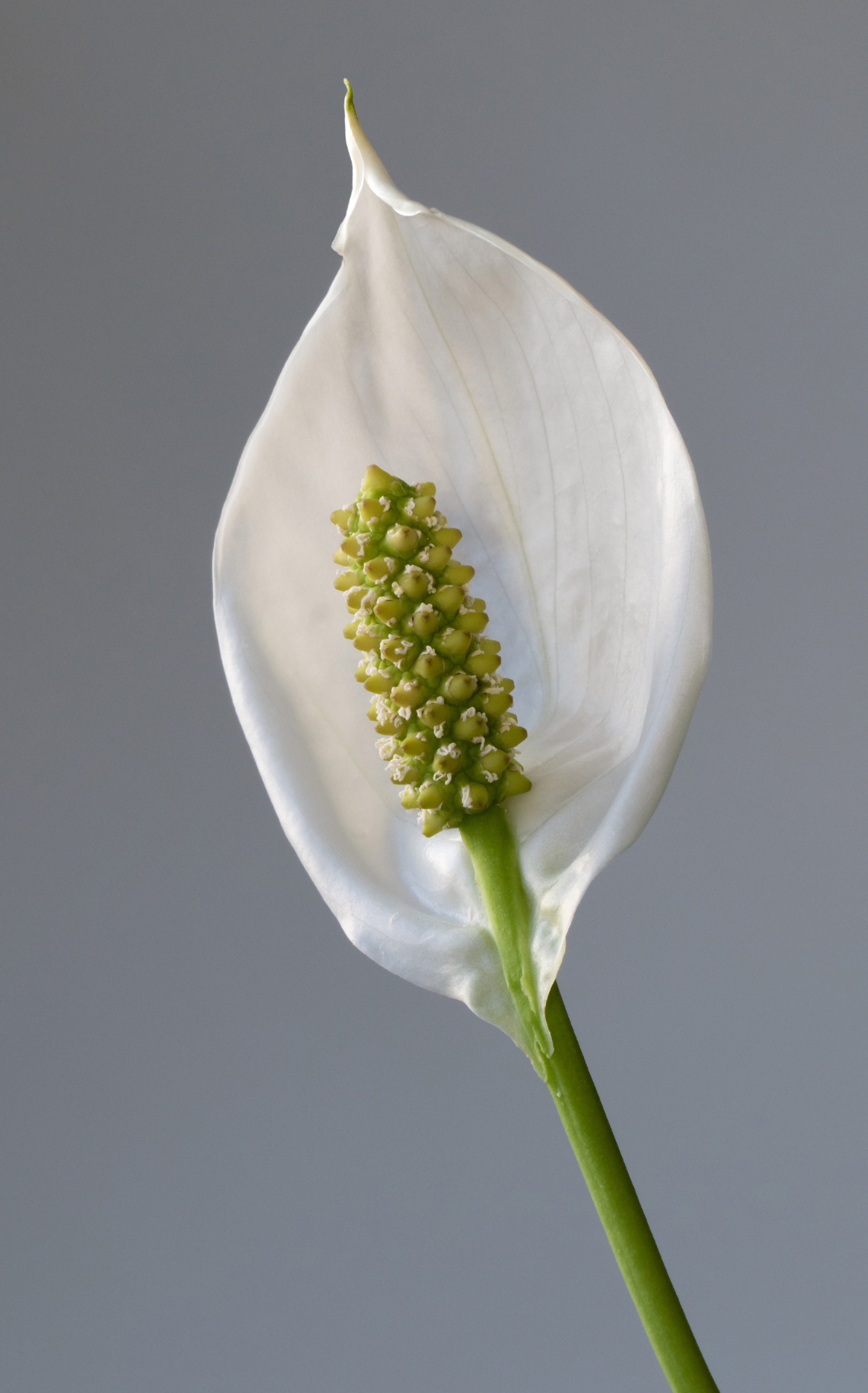
 Licensed representative photograph
Plant Guide
Peace Lily
Spathiphyllum wallisii
A clumping tropical known for glossy foliage and white spathes. Wilting can indicate thirst, but repeated dramatic wilting is not a good watering schedule.
Published source-backed guide. This guide meets Lorekeeper's published source, care-completeness, safety, and identity checks. It is source-backed, not an expert-review claim.
Toxic. Contains insoluble calcium oxalates; keep away from pets and children who may chew it.
Care
- Light
- Medium to bright indirect light; brighter filtered light supports flowering.
- Water
- Check below the surface and water when the mix is beginning to dry, before severe collapse.
- Growing medium
- A moisture-retentive but airy mix with drainage.
- Feeding
- Apply a dilute balanced fertilizer during active growth; excess salts can burn leaf tips.
- Temperature
- 65-85 F; protect from cold drafts.
- Humidity
- Average to high humidity with airflow.
- When to consider watering
- Check root-zone moisture before the plant reaches severe wilt.
- Watering method
- Water evenly and drain. If only the surface is dry, check deeper before deciding.
- Repotting
- Repot when root crowding or exhausted medium interferes with normal watering.
- Pruning
- Remove spent spathes and fully yellow leaves at their base.
- Beginner note
- Brown tips have several possible causes. Review water quality, salts, roots, and consistency before assuming low humidity.
Observe the plant and growing medium before acting. A reminder is a prompt to check, not an automatic instruction to water.
Characteristics
A clumping tropical known for glossy foliage and white spathes. Wilting can indicate thirst, but repeated dramatic wilting is not a good watering schedule.
Names & botanical identity
- Accepted name
- Spathiphyllum wallisii
- Plant family
- Araceae
- Plant group
- Flowering Plants
- Other known names
- No additional names recorded yet
- Safety
- Toxic
Contains insoluble calcium oxalates; keep away from pets and children who may chew it.
Growth
- Growth habit
- A clumping evergreen herb.
- Mature size
- 1–4 ft indoors
- Native range
- Tropical Colombia and nearby northwestern South America.
- Temperature
- 65-85 F; protect from cold drafts.
- Humidity
- Average to high humidity with airflow.
- Difficulty
- Easy
Propagation
Separate natural divisions that have their own roots and growing points.
When you add a propagation to Lorekeeper, connect it to the mother plant so its history and lineage remain intact.
Problems to recognize
These links describe possible or look-alike relationships, not a diagnosis. Start with visible evidence and rule out alternatives.
- Root rot syndrome: Persistent saturation can damage roots; confirm by inspection.
- Excess moisture / root stress: Wilt can occur with both thirst and damaged wet roots; check the root zone before watering.
- Spider mites: Warm dry interiors can support mite outbreaks; inspect undersides.
- Bacterial leaf spot syndrome: Wet foliage and splash can contribute to spreading leaf-spot syndromes.
History & lineage
Peace lilies entered indoor horticulture as shade-tolerant tropical foliage plants whose white spathes made them popular for homes and public interiors.
Add this guide to My Plants to preserve acquisition notes, parent plants, propagations, photographs, and future name changes in one living record.
Keep the useful part
Save Peace Lily to your garden.
Carry this guide into a private plant record, then add your own photographs, care, journal entries, and lineage over time.
Keep exploring