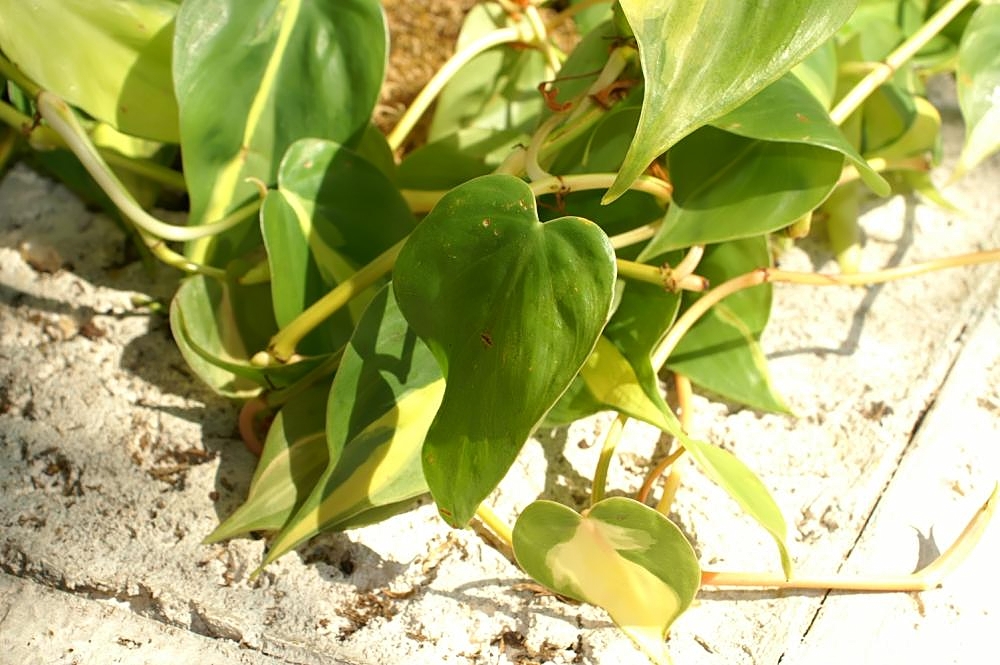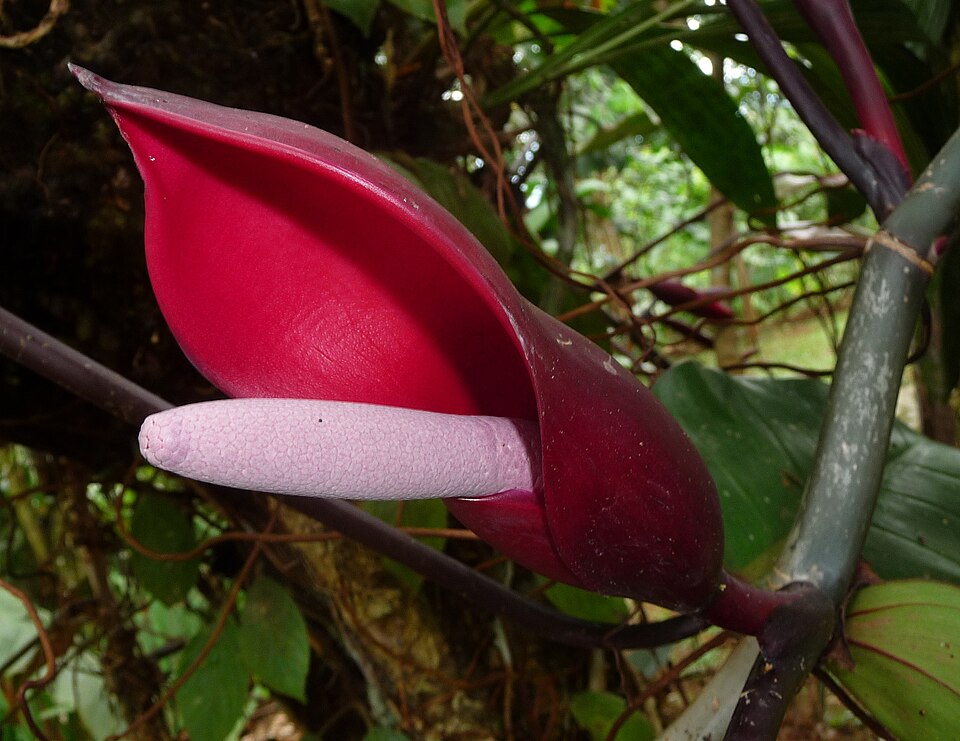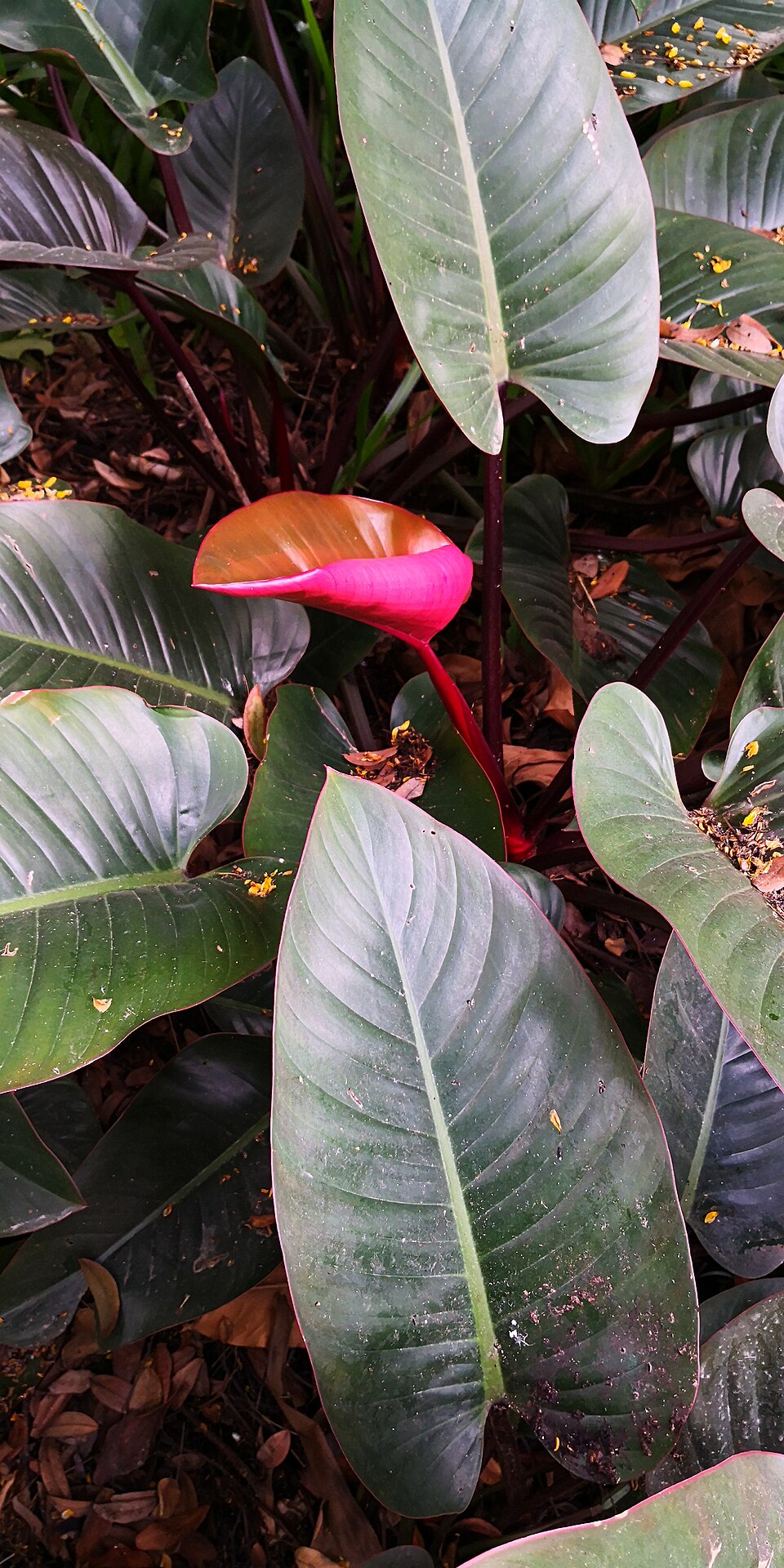
 Licensed identification photograph
Plant Guide
Pink Princess Philodendron
Philodendron erubescens 'Pink Princess'
Other known names: PPP
A collector aroid with irregular pink variegation on dark leaves.
Published source-backed guide. This guide meets Lorekeeper's published source, care-completeness, safety, and identity checks. It is source-backed, not an expert-review claim.
Toxic. Contains irritating calcium oxalate crystals; keep out of chewing reach.
Care
- Light
- Bright indirect light.
- Water
- Water after the upper portion dries.
- Growing medium
- An airy aroid mix.
- Feeding
- Feed lightly during active growth.
- Temperature
- 65–85°F
- Humidity
- Average to high humidity with airflow.
- When to consider watering
- Use the plant, roots, growing medium, pot weight, and recent conditions together. A calendar is a reminder to observe, not an instruction to water automatically.
- Watering method
- Check below the surface. If care is needed, water the full root zone and allow excess water to drain rather than giving repeated small sips.
- Repotting
- Repot when root condition, drainage, or stability shows a need. Increase pot size modestly and avoid burying the crown or stem more deeply than before.
- Pruning
- Remove damaged or fully spent tissue with clean tools. Avoid cutting healthy variegated or developing leaves only to change appearance.
- Beginner note
- Start with stable light and careful observation. Do not create an automatic task until the plant has been observed in its actual home.
Observe the plant and growing medium before acting. A reminder is a prompt to check, not an automatic instruction to water.
Characteristics
A collector aroid with irregular pink variegation on dark leaves.
Names & botanical identity
- Accepted name
- Philodendron erubescens 'Pink Princess'
- Plant family
- Araceae
- Plant group
- Philodendron
- Cultivar
- Pink Princess
- Other known names
- PPP
- Safety
- Toxic
Contains irritating calcium oxalate crystals; keep out of chewing reach.
Growth
- Growth habit
- Climbing, self-supporting when young, then helped by a support.
- Mature size
- About 3 ft tall and 16 in wide indoors
- Native range
- Cultivated form associated with Philodendron erubescens.
- Temperature
- 65–85°F
- Humidity
- Average to high humidity with airflow.
- Difficulty
- Intermediate
Propagation
Root stem cuttings with a healthy node.
When you add a propagation to Lorekeeper, connect it to the mother plant so its history and lineage remain intact.
Problems to recognize
These links describe possible or look-alike relationships, not a diagnosis. Start with visible evidence and rule out alternatives.
- Thrips: Inspect unfurling leaves and dark tissue for scars.
- Spray or chemical damage: Chemical spotting can be confused with damage on variegated leaves.
History & lineage
Pink Princess is a cultivated philodendron whose pink variegation can change between leaves.
Add this guide to My Plants to preserve acquisition notes, parent plants, propagations, photographs, and future name changes in one living record.
Keep the useful part
Save Pink Princess Philodendron to your garden.
Carry this guide into a private plant record, then add your own photographs, care, journal entries, and lineage over time.
Keep exploring