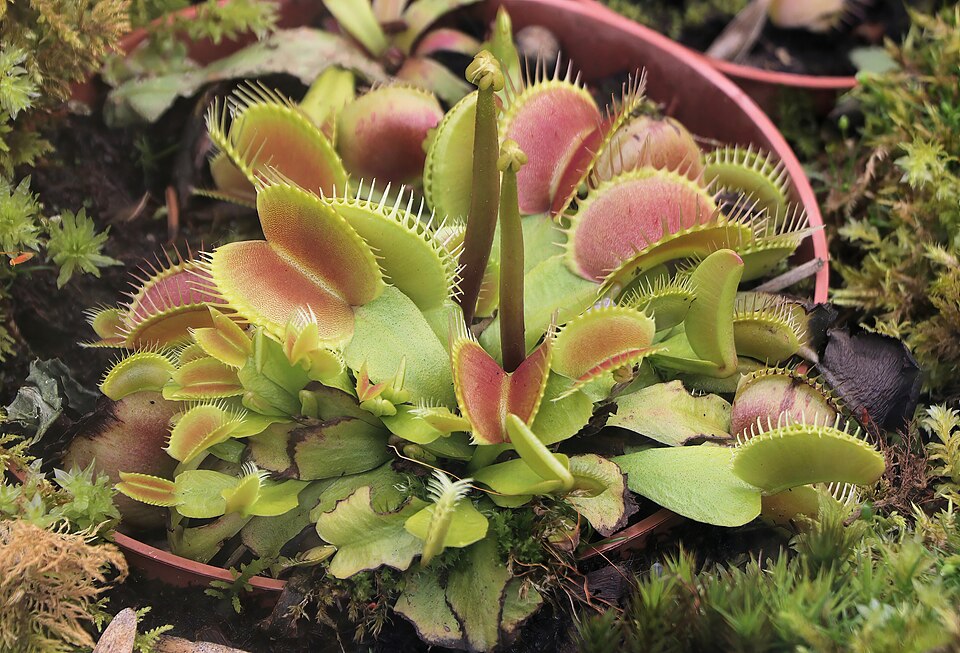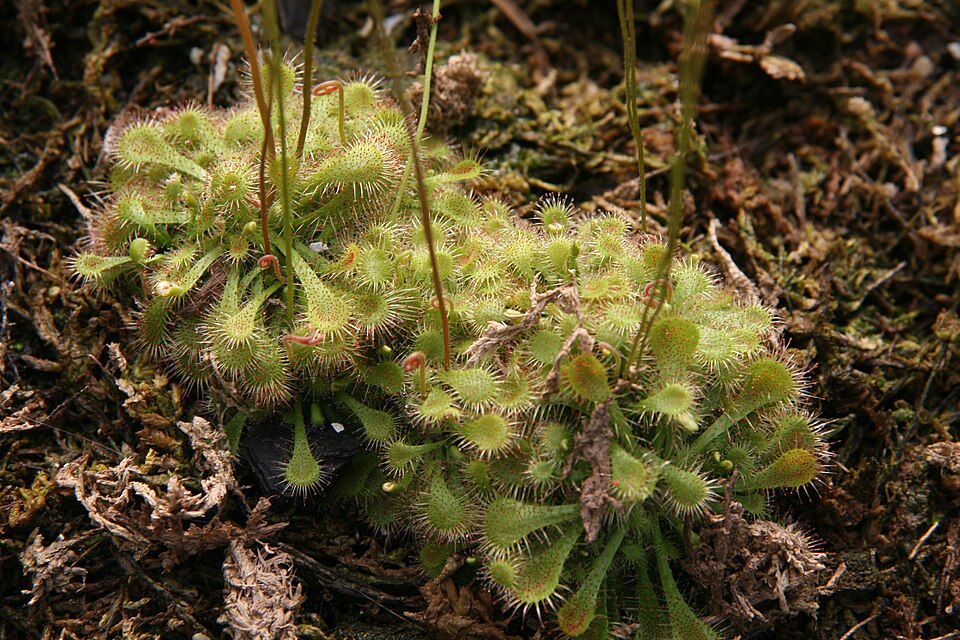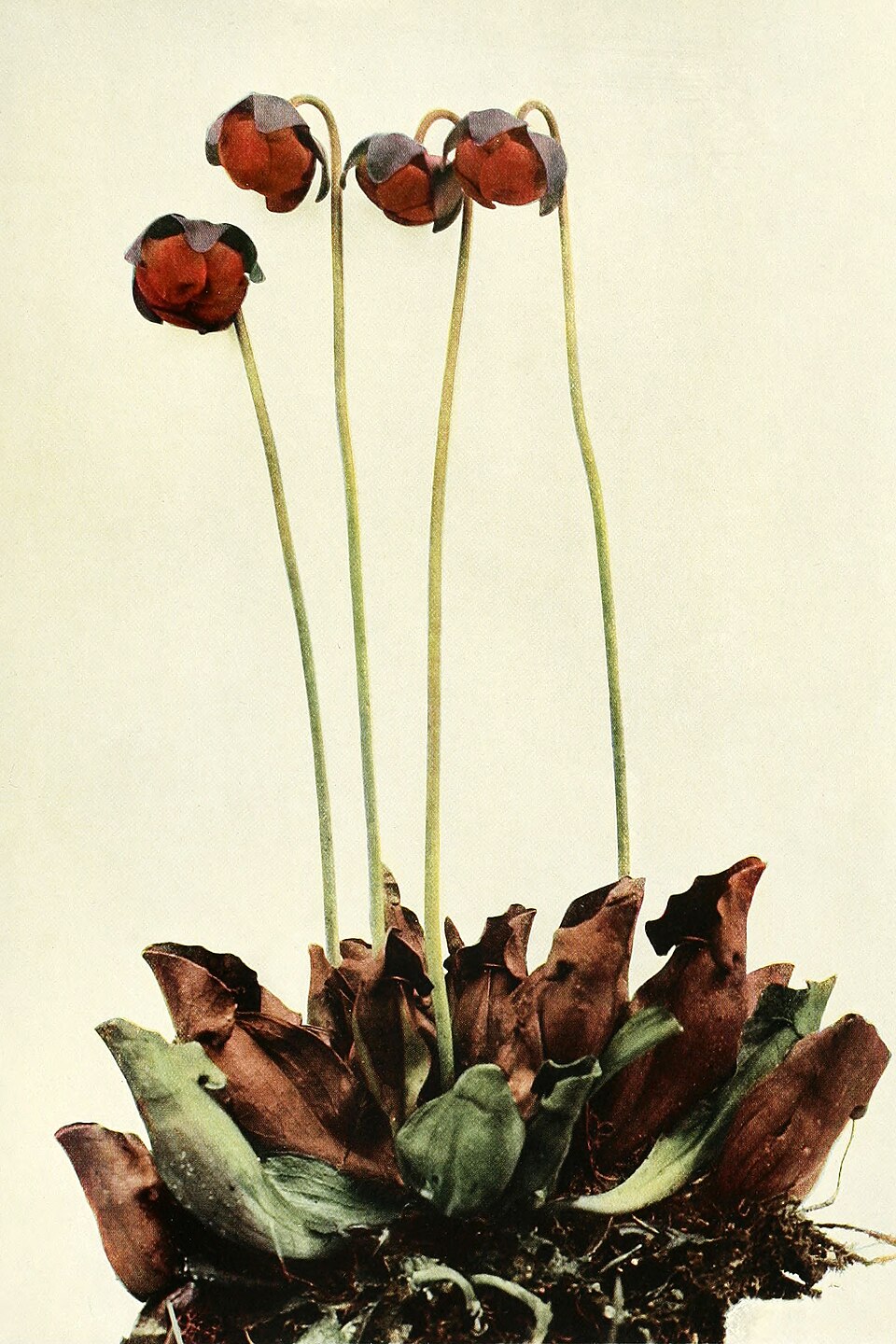
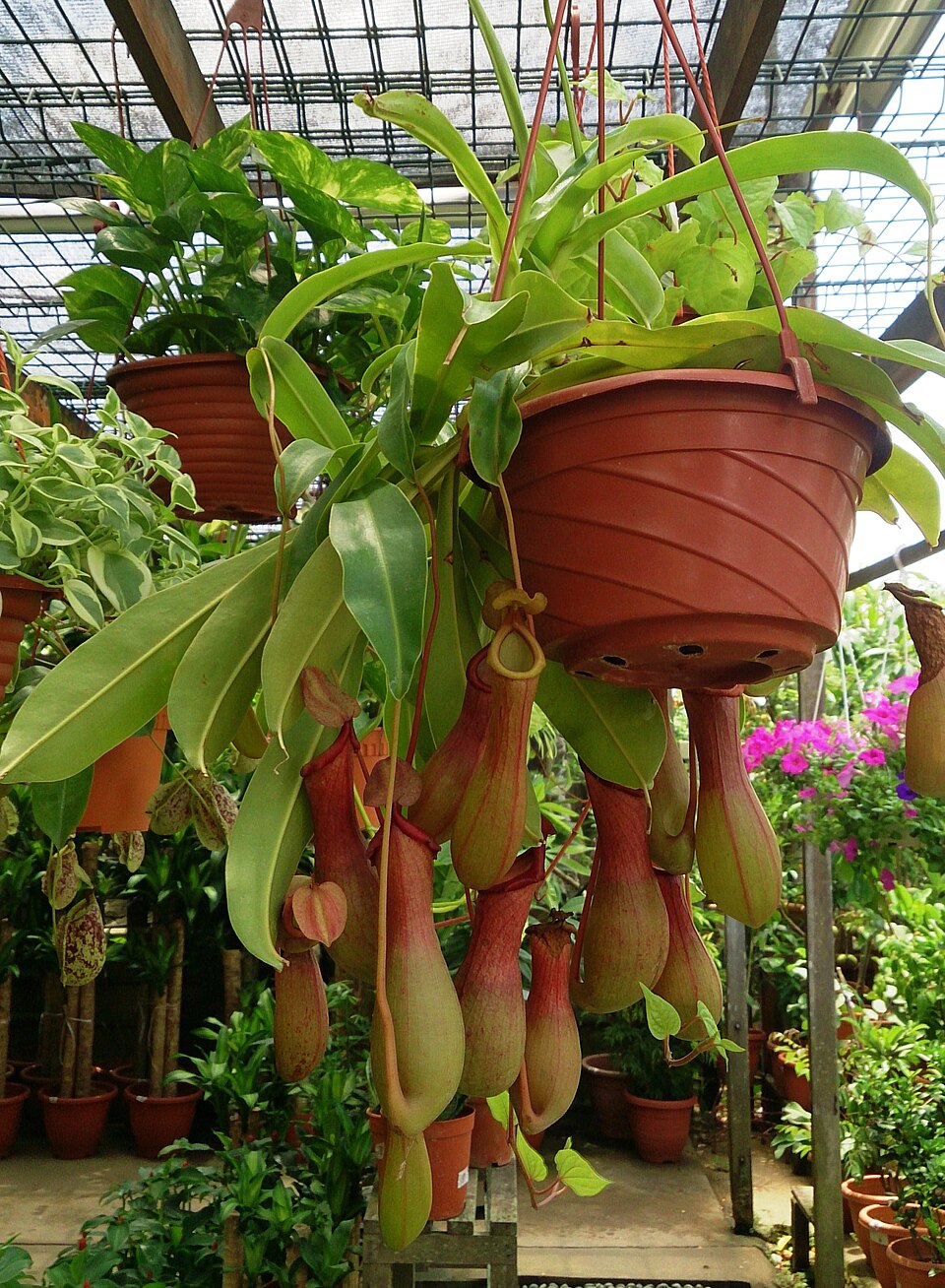
 Licensed representative photograph
Plant Guide
Tropical Pitcher Plant
Nepenthes × ventrata
Other known names: Monkey cup
A tropical vine producing hanging fluid-filled pitchers.
Starter guide. This bundled guide provides practical starting information while its full source and review record is being prepared.
Non-toxic. This is not a guarantee of safety. Avoid eating houseplants and contact a veterinarian or poison service if exposure causes symptoms.
Care
- Light
- Very bright light; gentle direct sun by species
- Water
- Use rain, distilled, or reverse-osmosis water
- Growing medium
- Nutrient-poor carnivorous mix with no fertilizer
- Feeding
- Do not fertilize the soil
- Temperature
- 55–85°F with seasonal needs by species
- Humidity
- Moderate to high by species
Observe the plant and growing medium before acting. A reminder is a prompt to check, not an automatic instruction to water.
Characteristics
A tropical vine producing hanging fluid-filled pitchers.
Names & botanical identity
- Accepted name
- Nepenthes × ventrata
- Plant group
- Carnivorous
- Other known names
- Monkey cup
- Safety
- Non-toxic
This is not a guarantee of safety. Avoid eating houseplants and contact a veterinarian or poison service if exposure causes symptoms.
Growth
- Growth habit
- Insect-trapping bog or tropical plant
- Native range
- Nutrient-poor wetlands worldwide
- Temperature
- 55–85°F with seasonal needs by species
- Humidity
- Moderate to high by species
- Difficulty
- Intermediate
Propagation
Division, leaf pullings, cuttings, or seed by species
When you add a propagation to Lorekeeper, connect it to the mother plant so its history and lineage remain intact.
Problems to recognize
These links describe possible or look-alike relationships, not a diagnosis. Start with visible evidence and rule out alternatives.
Compare water, light, temperature, nutrition, pests, and recent care.
Check this plant in Plant Problems →History & lineage
Tropical Pitcher Plant is recorded botanically as Nepenthes × ventrata. Lorekeeper keeps accepted and former names connected so the guide remains findable as taxonomy changes.
Add this guide to My Plants to preserve acquisition notes, parent plants, propagations, photographs, and future name changes in one living record.
Keep the useful part
Save Tropical Pitcher Plant to your garden.
Carry this guide into a private plant record, then add your own photographs, care, journal entries, and lineage over time.
Keep exploring